
Siding Repair in Oklahoma City, OK · Siding Replacement in Oklahoma City, OK · Siding Styles in Oklahoma City, OK
Siding Contractor in Oklahoma City — Hail-Resistant Materials for Oklahoma Weather
- Free estimates
- Fully insured
- 24/7 emergency service
- Insurance claim help
Oklahoma City’s siding market is driven by a force that homeowners in most of the country never have to think about: hail. The Oklahoma City metro sits at the intersection of Hail Alley and the Southern Plains, receiving an average of 7–10 hail events per year — each one capable of denting, cracking, or puncturing the vinyl and fiber cement siding that protects the exterior envelope of virtually every Oklahoma City home. Unlike roofing damage, siding damage from hail is often gradual and cumulative rather than immediately dramatic: pits, cracks, and perforations accumulate across multiple storm seasons until the siding’s weather barrier function is compromised and moisture intrusion begins. Oklahoma City homeowners in Moore, Yukon, Del City, and Edmond face this reality every spring, and the question isn’t whether their siding will eventually need attention — it’s whether they have the right contractor to assess it accurately and recommend the right response. Central Oklahoma Siding Pros has been working in the Oklahoma City metro for more than a decade — installing, repairing, and replacing siding across the full range of OKC’s housing stock with the material knowledge and insurance navigation experience this specific market requires. We know how vinyl siding installed in the 1990s Midwest City suburbs performs under Oklahoma’s thermal cycling, and why the fiber cement revolution changed the calculus for OKC homeowners comparing long-term siding investment options. We understand James Hardie’s specific installation requirements and how they intersect with Oklahoma’s wind and moisture conditions. Serving Oklahoma City, Moore, Yukon, Edmond, Del City, and the broader 20-mile metro radius, we bring the Oklahoma-specific material expertise and storm documentation experience that out-of-market contractors can’t offer.
Why Oklahoma City Siding Needs Specialized Care
Oklahoma City’s siding market is shaped by climate conditions that are among the most demanding in the United States — and that separate siding contractors with genuine local material knowledge from those importing approaches designed for other markets.
Oklahoma’s Hail, Wind, and Thermal Extremes: The Siding Challenge
Oklahoma City’s position in Hail Alley means siding faces a threat most American homeowners never experience at meaningful frequency. With 7–10 hail events annually and stones frequently exceeding 1 inch in diameter, OKC vinyl siding absorbs impact damage across multiple storm seasons. Below roughly 50°F, vinyl siding becomes brittle — and Oklahoma’s winters regularly produce sub-freezing temperatures that make hailstones strike an already-brittled surface. The result is siding that shows more cracking and perforation per hail event in February or March than the same event would produce in August.
Read moreShow less
Wind compounds the challenge. Oklahoma City’s flat Southern Plains terrain provides no topographic wind breaks, and gusts regularly reach 60–80 mph during spring severe weather systems. These sustained high-wind events cause vinyl siding to rack and buckle — pulling fasteners progressively looser over successive events until panels begin lifting or separating from their locking tracks. The thermal environment adds a third stress dimension: summer temperatures that push siding surface temperatures above 160°F in direct sun, combined with winter cold, create a thermal cycling range of 200+ degrees across the year that causes vinyl to expand and contract beyond the tolerances of improper installations.
Oklahoma City’s Housing Stock: 1950s Through 2010s Siding Diversity
Oklahoma City’s residential inventory spans more than 60 years of siding evolution, with each construction era presenting distinct condition and replacement patterns. The post-war suburban development that defines Midwest City, Del City, and the older inner-city neighborhoods of Oklahoma City produced a large stock of 1950s–1970s homes originally clad in wood siding, aluminum siding, or early vinyl — much of which has been replaced once or twice since original installation. This inventory now carries a mix of 1980s–1990s vinyl in various stages of age and condition, and many properties are approaching or at their second replacement window.
The suburban growth that swept Moore, Yukon, and Edmond from the 1980s through the 2000s delivered primarily vinyl siding on production homes — practical, cost-effective, and widely available, but not optimized for Oklahoma’s hail frequency or thermal extremes. This generation of vinyl siding is now 20–40 years old across much of the metro, reaching the end of its functional service life. At the same time, a growing segment of OKC homeowners are choosing fiber cement and James Hardie as replacement materials — products that offer superior hail resistance, dimensional stability in Oklahoma’s thermal range, and dramatically longer service life than vinyl.
Oklahoma Building Permits and the Insurance Claim Environment
Oklahoma City and its incorporated suburbs require building permits for full siding replacement projects. The city’s building inspection process applies to both the siding removal and the new installation, with inspections focused on moisture barrier continuity, fastening pattern compliance, and proper sealing at penetrations and trim. Like roofing, siding replacement in Oklahoma City is frequently insurance-driven: hail and wind damage to siding constitutes a covered loss under most Oklahoma homeowner policies, and the same carrier filing windows that apply to roofing claims apply to siding. Documenting hail damage to siding accurately — distinguishing impact marks from UV crazing or manufacturing defects — requires the same close-range assessment that legitimate roofing damage documentation demands.
Common Siding Problems in Oklahoma City
After more than a decade of siding work across the Oklahoma City metro, Central Oklahoma Siding Pros has developed a precise picture of the failure patterns that appear most consistently in this market. Every problem below is driven by the specific combination of climate, housing age, and construction type that defines OKC.
Hail Impact Damage: Pitting, Cracking, and Perforation
Hail impact damage describes the physical marks, cracks, and perforations that hailstones create in vinyl and fiber cement siding surfaces — from shallow surface dimpling in minor events to full-thickness perforations in larger-stone events.
In Oklahoma City’s hail-active environment, siding damage accumulates across multiple storm seasons rather than in a single catastrophic event. Vinyl siding struck during cold-weather events — below 50°F — is most vulnerable to through-cracks and perforation because the material is at its most brittle state. The 2021 February storm sequence, which combined freezing temperatures and hail across much of the OKC metro, produced concentrated vinyl siding perforation damage that represented legitimate covered insurance losses for properties across the metro.
Read moreShow less
Signs you’ll notice:
- Circular dimples, pits, or holes in vinyl panels following a storm event
- Cracks running parallel or perpendicular to panel course lines
- Through-holes visible when backlit or inspected in raking light from close range
- Impact marks on aluminum trim pieces, window frames, and corner posts accompanying panel damage
- Insurance claim inquiries from neighbors following a storm — indicating a pattern event across the neighborhood
- Visible color differences at impact sites on darker colored siding where surface coating was disrupted
Oklahoma City-specific patterns: Del City and Midwest City — tracking under the most common southwest-to-northeast storm approach path — show the highest concentration of hail siding damage in the metro. South- and west-facing walls sustain the most impact from the storm approach direction. Older vinyl siding with UV-degraded surfaces shows more cracking per impact than newer material.
Severity: Serious. Perforated or cracked siding panels allow water intrusion behind the siding into the moisture barrier and wall assembly. Act before the next rain season.
Typical solution: Insurance claim documentation and full siding replacement where damage is systemic; targeted panel replacement for isolated damage on newer systems.
Vinyl Panel Warping, Buckling, and Unlocking
Vinyl panel warping and buckling describes the distortion of vinyl siding panels from their original flat profile — panels that bow outward, wave horizontally, or have separated from their interlocking track — caused by thermal expansion exceeding the tolerances of the installation or by wind-driven mechanical displacement.
Oklahoma City’s 200°F+ annual temperature cycling range across siding surfaces is among the most extreme in the country. Vinyl siding installed without appropriate expansion gaps at trim joints and panel ends — a common installation shortcut — has nowhere to move when it expands under summer heat and contracts in winter cold. Over several seasons of constrained cycling, panels buckle outward, separate from their locking channels, and create gaps through which water and wind-driven rain penetrate the wall assembly. This problem is pervasive in older vinyl installations across the OKC metro because the expansion gap requirements that current installation standards specify weren’t consistently followed in 1980s and 1990s production housing construction.
Signs you’ll notice:
- Panels that bow outward, creating visible waviness along courses visible in raking light
- Gaps between panel ends and vertical trim pieces visible along window frames or corners
- Panels that have separated from their locking channel — a clicking sound when pressed and a gap at the lap line
- Buckling that appears in summer heat and partially resolves in winter cold — indicating thermal stress rather than impact damage
- Nail slot distortion visible where horizontal expansion should have been accommodated
- Water infiltration at the wall assembly behind buckled panels during wind-driven rain
Oklahoma City-specific patterns: South- and west-facing wall sections in Moore, Yukon, and the western Oklahoma City suburbs experience the most severe thermal buckling because they receive the highest sun exposure. Production homes in Bethany and Warr Acres with original 1980s vinyl show the oldest and most advanced thermal distortion in the service area.
Severity: Moderate to Serious. Buckled siding that has separated from locking channels allows wind-driven rain infiltration behind the moisture barrier. Address before next storm season.
Typical solution: Full vinyl replacement with proper expansion gap installation; or for newer siding with limited buckled sections, panel replacement with correct installation technique.
Moisture Intrusion and Wall Assembly Damage Behind Siding
Moisture intrusion damage describes the deterioration of the wall assembly components — housewrap, sheathing, framing, and insulation — behind the siding envelope caused by water entry through siding failures, failed flashing at windows and penetrations, or improper original installation that left gaps in the moisture barrier.
This is the most consequential siding failure mode in Oklahoma City because it’s invisible from outside until the damage is advanced. Oklahoma’s annual weather cycle — summer drought followed by intense spring thunderstorm seasons with wind-driven rain — creates moisture loading conditions where water that gets behind the siding can’t dry efficiently. The red clay subsoil that defines OKC’s built environment retains ground moisture that compounds humidity in wall cavities, accelerating the biological growth and wood deterioration that follow sustained moisture exposure in wall assemblies.
Signs you’ll notice:
- Soft or spongy feel when pressing siding panels — indicating sheathing deterioration behind
- Visible mold or staining on interior walls, particularly at lower courses and around window frames
- Paint bubbling on interior drywall surfaces adjacent to exterior walls
- Visible rot or discoloration at wood trim, windowsill, or corner post areas
- Musty odor in rooms adjacent to exterior walls — particularly after rain events
- Elevated energy costs as insulation in compromised wall sections loses R-value
Oklahoma City-specific patterns: Homes in Piedmont, Arcadia, and the rural fringe communities — where original construction sometimes had less rigorous moisture barrier installation — show higher rates of concealed wall moisture damage than the denser urban metro. Properties where previous storm repairs were performed without proper moisture barrier restoration are particularly vulnerable.
Severity: Serious to Emergency. Active wall assembly moisture damage affecting structural framing requires prompt investigation and remediation before the damage scope expands with continued moisture exposure.
Typical solution: Siding removal and inspection of full wall assembly, moisture barrier replacement, sheathing and framing repair as needed, and full siding reinstallation with correct moisture management details.
Fiber Cement Cracking, Delamination, and Paint Failure
Fiber cement siding failure describes the cracking, delamination, and surface paint failure that occur in fiber cement products — including James Hardie, LP SmartSide, and off-brand alternatives — when installed incorrectly, painted with inappropriate coatings, or exposed to sustained moisture intrusion at cut ends or fastener locations.
Fiber cement has become the dominant siding material choice for Oklahoma City replacement projects because of its superior hail resistance and dimensional stability compared to vinyl. But fiber cement requires specific installation practices — factory-painted cut ends sealed before installation, correct fastening patterns, appropriate clearances from grade and trim — that less experienced installers frequently skip. Oklahoma’s intense UV environment accelerates paint system degradation on fiber cement, and products installed with field-applied paint rather than factory-primed-and-painted finishes show accelerated fading, peeling, and base material exposure in this climate.
Signs you’ll notice:
- Paint peeling or bubbling at cut board ends and fastener locations
- Visible surface cracking following board face grain lines
- Swelling at board edges or ends indicating moisture absorption through unsealed cuts
- Color fading particularly pronounced on south and west-facing walls
- Loose boards caused by fastener pull-through from improper fastening into non-structural materials
- Delamination visible at board face causing surface layers to separate
Oklahoma City-specific patterns: Homes in Nichols Hills and The Village — where higher-end construction specifications drove early adoption of fiber cement in the late 1990s and 2000s — show the oldest fiber cement installations in the metro, some of which are now approaching 20+ years and showing paint system failures requiring repainting or full replacement.
Severity: Moderate. Fiber cement cracking and paint failure are early-stage conditions that, if addressed promptly, can be resolved through targeted repair and repainting rather than full replacement.
Typical solution: Targeted board replacement, cut end sealing, and factory paint system application where isolated; full replacement with James Hardie factory-primed products where failure is systemic.
Fading, Chalking, and UV Degradation on Vinyl Siding
UV degradation describes the progressive breakdown of vinyl siding’s color and surface coating under Oklahoma City’s intense solar radiation — producing chalking (a white powdery surface residue), color fading, and surface brittleness that reduces the material’s ability to withstand subsequent hail or impact events.
Oklahoma City’s low latitude and the flat Southern Plains terrain that maximizes direct sun exposure on south and west-facing walls create UV degradation rates that are significantly higher than for vinyl siding in northern or cloudier markets. Vinyl siding installed in the early-to-mid 1990s in Moore, Yukon, and western Oklahoma City suburbs is now 30+ years old and frequently shows severe UV degradation — chalk residue that wipes off on contact, surface brittleness that causes panels to crack from minor impact rather than flex, and color shift so significant that matching original colors for repair is impossible.
Signs you’ll notice:
- White chalky residue that transfers to your hand when you run it across the siding surface
- Visible color fading or bleaching particularly pronounced on south and west-facing walls
- Siding that feels brittle or crisp rather than slightly flexible when pressed
- Color mismatch between sun-facing and shaded walls on the same home
- Panels that crack or fracture from minor contact impact rather than deflecting
- Oxidized surface texture that appears matte rather than the original slight sheen
Oklahoma City-specific patterns: Original vinyl siding on 1990s production homes in Moore, Yukon, Edmond, and the western Oklahoma City corridors shows the highest UV degradation rates. South and west elevations on any home with original vinyl in the 25–35 year age range are likely in advanced degradation.
Severity: Moderate. UV-degraded vinyl in advanced stages is beyond cosmetic remediation and warrants replacement before the brittleness increases susceptibility to hail damage.
Typical solution: Full vinyl replacement with current-generation UV-stabilized vinyl, or upgrade to fiber cement or James Hardie for a permanent hail-resistant alternative.
Board and Batten Gaps, Separation, and Moisture Infiltration
Board and batten failures describe the gap formation, batten separation, and moisture infiltration that occur in vertical board and batten siding systems when battens separate from the underlying boards, when original caulking at trim joints fails, or when the vertical channel behind the battens allows water to run directly into the wall assembly at gaps.
Board and batten siding has experienced renewed popularity in Oklahoma City’s residential market as part of the farmhouse aesthetic trend that influenced new construction and renovation across the metro in the 2010s. Both wood and engineered composite board and batten products require maintenance-intensive caulk and paint systems that Oklahoma’s climate degrades rapidly — the same UV and thermal cycling that damages vinyl and fiber cement attacks the caulked joints and painted surfaces of board and batten systems. In Oklahoma City’s hail environment, the vertical orientation of boards also means wider face exposure per panel than horizontal siding courses, concentrating impact surface area on a per-board basis.
Signs you’ll notice:
- Visible gaps opening between battens and underlying boards as fasteners loosen
- Caulk cracking or pulling away at trim joints, window frames, and corner transitions
- Paint peeling at board edges, particularly at the top edges where water pools
- Staining or moisture damage behind separated battens discovered during close inspection
- Battens that flex visibly when pushed, indicating loose fasteners
- Water infiltration at the base of the wall assembly directly below separated batten locations
Oklahoma City-specific patterns: New construction and renovation projects in Edmond, Piedmont, and Arcadia that incorporated board and batten in the 2013–2018 period are now entering the first maintenance window where caulk and paint system failures require attention. Properties where wood board and batten was used in preference to engineered alternatives show the most advanced degradation.
Severity: Moderate. Batten separation and caulk failure are addressable maintenance conditions; moisture infiltration behind separated battens requires more extensive remediation.
Typical solution: Batten fastening, caulk replacement at all joints, paint system renewal; or replacement with engineered board and batten or James Hardie vertical panel systems where wood substrate has deteriorated.
Free, no-obligation estimates
Talk to Central Oklahoma Siding Pros
Tell us what you need and we’ll take it from there.
Complete Siding Services for Oklahoma City and the Central Okc Metro
Central Oklahoma Siding Pros provides the full spectrum of siding services for Oklahoma City’s diverse residential market — from targeted hail damage repair through complete James Hardie fiber cement installations — calibrated to the specific conditions and material requirements of Central Oklahoma’s climate.
James Hardie Siding Installation
We are a James Hardie preferred installer for the Oklahoma City metro — providing ColorPlus Technology factory-painted and primed James Hardie fiber cement siding installation in all profiles: HardiePlank lap, HardiePanel vertical, and HardieShingle siding.
James Hardie’s factory-applied ColorPlus finish — baked on at the manufacturing facility rather than field-applied — is specifically engineered for UV stability in high-sun markets like Oklahoma City. The fiber cement composition is inherently hail-resistant in a way that vinyl cannot be, and Hardie’s Engineered for Climate specifications for the “HardieZone 4” classification that covers Central Oklahoma address the specific moisture and temperature cycling that OKC siding endures.
Read moreShow less
Best for: Homeowners upgrading from vinyl and looking for a permanent hail-resistant solution; new construction; and any property where the insurance hail damage cycle of vinyl replacement has become unsustainable.
Fiber Cement Siding Installation
We install LP SmartSide, James Hardie, and other engineered fiber cement siding products — managing moisture barrier installation, correct fastening patterns, cut end sealing, and proper trim integration that distinguish correct fiber cement installations from the shortcuts that produce premature failure.
In Oklahoma City’s hail environment, fiber cement’s impact resistance advantage over vinyl is measurable and significant. Class 4 impact-resistant siding products — the same UL 2218 rating that applies to roofing — are available in fiber cement and qualify for carrier premium discounts from major Oklahoma insurers.
Best for: Full replacements on 20+ year vinyl systems, storm damage-driven replacements where homeowners want a hail-resistant upgrade, and new construction where long-term performance outweighs first cost.
Vinyl Siding Installation
We install vinyl siding to current manufacturer specifications — correct expansion gap tolerances, proper fastening pattern, moisture barrier continuity — for Oklahoma City’s thermal cycling requirements and wind loading conditions.
For homeowners prioritizing budget, vinyl remains a viable choice when installed correctly. Our vinyl installations address the expansion gap and fastening deficiencies that cause premature failure in older OKC vinyl systems, and we offer current-generation UV-stabilized products that outperform the 1990s-era materials they replace.
Best for: Budget-conscious homeowners replacing aging vinyl where a like-for-like replacement is the priority; smaller-scope repairs and partial replacements.
Board and Batten Siding Installation
We install board and batten siding in engineered composite and fiber cement materials — managing vertical fastening requirements, moisture barrier transitions unique to vertical cladding systems, and the caulk and trim integration that determines long-term performance in Oklahoma’s climate.
For homeowners committed to the board and batten aesthetic, engineered composite and James Hardie vertical panel products offer substantially better hail resistance and UV stability than wood alternatives in Oklahoma City’s exposure environment.
Best for: New construction or renovation projects targeting farmhouse or transitional architectural character; properties in Edmond, Piedmont, and Arcadia where the aesthetic is popular.
Siding Repair
Targeted repair of specific failure points — hail-cracked panels, buckled sections, failed caulk at trim joints, moisture barrier repair, and any single-scope repair that extends a sound siding system’s service life.
Repair is the right recommendation when the surrounding system is sound and the damaged section is genuinely isolated. We’re honest about this distinction — recommending replacement when replacement is warranted, and repair when repair genuinely serves the homeowner’s interests.
Best for: Relatively new siding with isolated storm damage, post-inspection repairs addressing specific failure points before next storm season.
Siding Inspection
Full siding condition assessments — all elevations, all trim and flashing intersections, window and door frame conditions, moisture barrier integrity assessment, and written findings with photographs. Post-storm insurance documentation for Oklahoma carrier filing requirements.
For Oklahoma City’s real estate market, pre-purchase siding inspections on older properties are valuable — siding conditions that aren’t visible from the street frequently have significant replacement cost implications that affect transaction negotiations.
Best for: Post-storm documentation, home purchase due diligence, and annual condition monitoring for property managers and rental owners in the OKC metro.
Siding Replacement
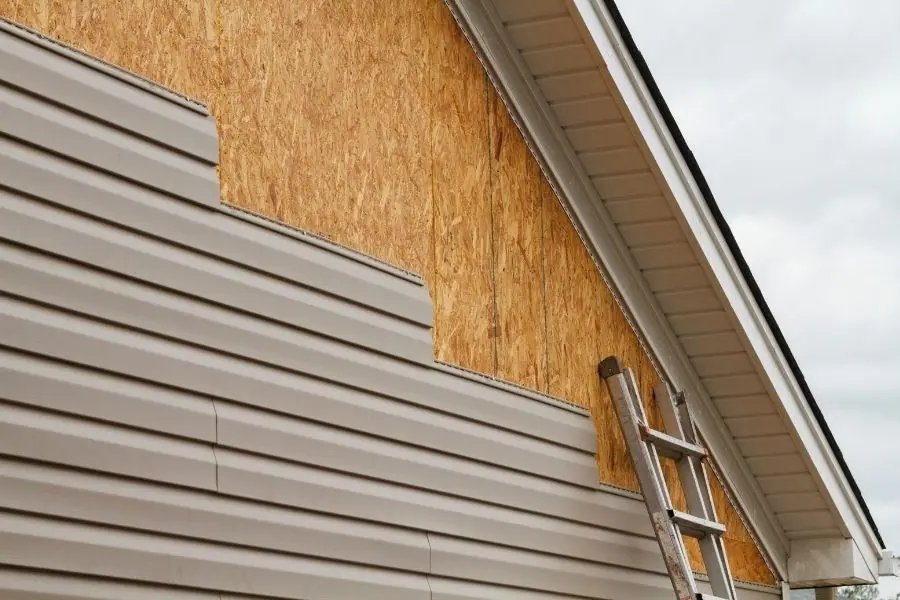
Complete siding replacement from removal through finished installation — managing Oklahoma City permits, moisture barrier installation, new siding and trim installation, and all associated flashing and caulk work for a complete weather-tight envelope.
Replacement is the appropriate scope for systems past useful service life, systems with systemic storm damage, and properties where partial repairs have failed repeatedly because the underlying system conditions can’t sustain additional patch work.
Best for: Homes with 25+ year vinyl systems, post-storm replacements under insurance claims, and properties being prepared for sale requiring documented siding condition.
Siding Maintenance
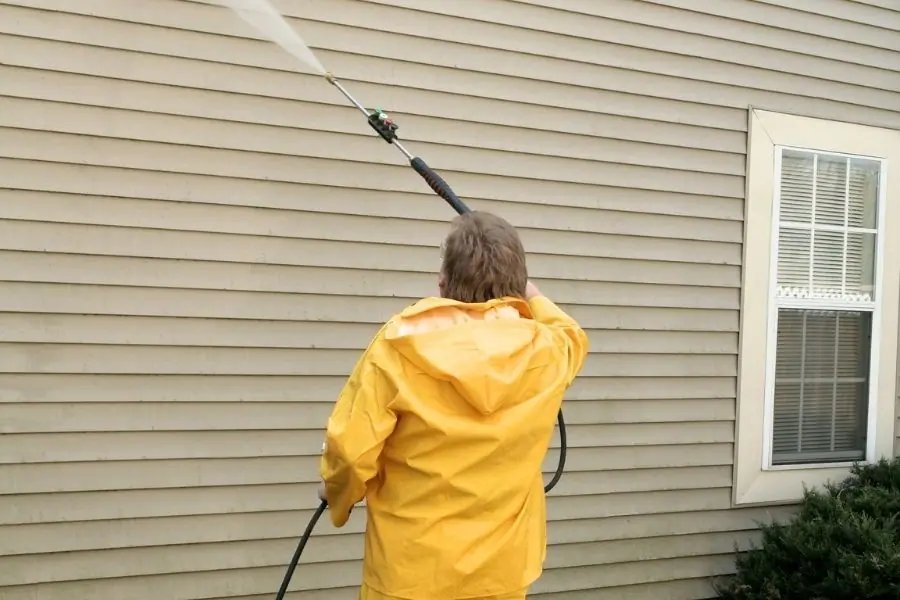
Scheduled maintenance services — inspection, caulk renewal at all trim joints, fastener re-securing where loosening has developed, cleaning, and minor repair of developing conditions — designed to extend siding service life between full replacement cycles.
Given Oklahoma City’s annual hail season, spring maintenance visits before peak storm exposure allow early identification of impact damage and existing vulnerabilities before they become moisture intrusion events.
Best for: Homeowners maximizing fiber cement or vinyl service life, rental property managers with multiple OKC properties, and commercial property owners managing building envelope conditions on a preventive basis.
Our process
What to Expect: Our Siding Process
Central Oklahoma Siding Pros follows a transparent, documented process from first contact through project completion. Oklahoma’s permit requirements, insurance environment, and the material-specific installation details that determine long-term performance make process discipline essential.
- 01
Contact and Inspection Scheduling
You contact us by phone, email, or online form. We gather your address, the nature of the concern — post-storm assessment, planned replacement, or specific damage — and schedule a free inspection. For post-storm calls, we note the storm eve
- 02
Full Siding Inspection and Condition Assessment
Our inspector examines all siding elevations at close range — not from the ground with binoculars — assessing panel condition, trim and caulk integrity, window and door flashing conditions, moisture barrier continuity where accessible, and
- 03
Written Estimate and Material Specification
We provide a written, itemized estimate specifying material type and product, moisture barrier specification, trim details, permit fees for applicable OKC-area municipality, and project timeline. For James Hardie projects, we include ColorP
- 04
Installation
Installation begins with window and door protection, property perimeter setup, and proper material acclimation where required. All old siding material is removed before installation — we don’t install over failing systems. Moisture barrier
- 05
Final Walkthrough, Cleanup, and Warranty
Supervisor inspection of all elevations confirming complete installation quality, all caulk and trim work verified, full cleanup of all removed siding and debris, written warranty documentation provided, and manufacturer warranty registrati
Why Oklahoma City Trusts Central Oklahoma Siding Pros
Serving Oklahoma City and Surrounding Communities
Central Oklahoma Siding Pros covers Oklahoma City and the surrounding metro communities within a 20-mile service radius, with deep familiarity with the housing inventory and specific siding conditions in each area.
- Jones, OK
- Moore, OK
- Yukon, OK
- Edmond, OK
- Bethany, OK
- Spencer, OK
- Del City, OK
- Warr Acres, OK
- Midwest City, OK
- Arcadia, OK
- Choctaw, OK
- Nichols Hills, OK
- Oklahoma City, OK
- Piedmont, OK
- The Village, OK
Oklahoma City Siding Cost Guide
Siding costs in Oklahoma City vary primarily by material choice, house size, and whether the project is insurance-funded. These are the factors that determine where your project falls in the range.
1. Material Selection (Primary Factor)
Vinyl is the lowest first-cost option; fiber cement and James Hardie carry a 30–50% premium over vinyl but offer significantly longer service life and superior hail resistance. For Oklahoma City homeowners comparing these options, the key calculation is the insurance premium discount that Class 4 impact-resistant siding qualifies for — discounts that often recover the material cost premium within 5–8 years. We provide the Class 4 impact resistance documentation that Oklahoma carriers require for discount qualification on qualifying fiber cement products.
Read moreShow less
2. House Size and Complexity (Primary Factor)
Siding is priced per square of coverage (100 sq ft). OKC’s diverse housing stock ranges from 1,000 sq ft bungalows to 3,000 sq ft two-story colonials. Two-story homes require scaffolding or lift equipment that adds to installation cost. Complex rooflines with multiple gable ends, multiple window counts, and extensive trim require more material and labor than simple ranch profiles.
3. Insurance Claim vs. Cash Pay (Process Factor)
When a hail damage insurance claim covers the replacement, the homeowner’s primary cost is their deductible. Oklahoma carriers’ approved replacement costs for siding claims are based on prevailing OKC labor and material rates. We work within approved insurance scopes accurately — providing completed work that matches the claim documentation.
4. Oklahoma City Permit Fees (Location-Specific Factor)
Oklahoma City and surrounding municipalities require permits for full siding replacements. Permit fees typically run $150–$400 for standard residential scopes, depending on the municipality and project value. We include permit fees in all qualifying project estimates and manage the permit process.
5. Moisture Barrier and Substrate Condition (Variable)
If existing housewrap is deteriorated or missing behind the old siding — common on older OKC homes — full moisture barrier replacement adds cost beyond the siding material and installation. If sheathing or framing moisture damage is revealed when old siding is removed, structural repair adds additional cost. We identify high-risk properties during inspection and communicate scope variables transparently.
Typical Cost Ranges in Oklahoma City:
Vinyl replacement — 1,600 sq ft ranch, standard production vinyl: Cost Range: $6,500 – $9,500
Fiber cement replacement — 1,600 sq ft ranch, LP SmartSide or comparable: Cost Range: $9,500 – $13,500
James Hardie ColorPlus replacement — 2,000 sq ft home, HardiePlank with preferred installer warranty: Cost Range: $13,000 – $18,000
Board and batten installation — 1,800 sq ft with mixed horizontal and vertical elevation treatment: Cost Range: $11,000 – $16,000 depending on material selection
Financing available for qualifying installation scopes. Ask about current terms.
Free on-site inspection provides accurate project-specific pricing before any commitment.
FAQ
Oklahoma City Siding FAQ
How much does siding replacement cost in Oklahoma City?
Vinyl siding replacement in Oklahoma City runs $6,500–$9,500 for a typical ranch-size home. Fiber cement replacements run $9,500–$13,500, and James Hardie installations run $13,000–$18,000 for mid-size homes. The cost difference between vinyl and fiber cement often recovers through reduced hail replacement frequency and insurance premium discounts that Class 4 impact-resistant products qualify for. When an insurance claim covers the replacement, your cost is typically limited to your deductible. Free inspection provides accurate project-specific pricing.
Is James Hardie worth the extra cost in Oklahoma City?
For most OKC homeowners, yes — and the math is more favorable than the upfront cost difference suggests. James Hardie fiber cement carries significantly better hail resistance than vinyl, meaning it doesn’t need to be replaced after every major hail event the way vinyl does. The Class 4 impact resistance rating qualifies for carrier premium discounts from major Oklahoma insurers — discounts that typically recover the Hardie premium within 5–8 years. And Hardie’s 30-year finish warranty and 50-year material warranty provide protection that outlasts two or three cycles of vinyl replacement. For homeowners who’ve replaced vinyl siding once or twice already, Hardie is often the financially sensible permanent solution.
Does siding hail damage qualify for an insurance claim in Oklahoma City?
Yes — hail damage to siding constitutes a covered loss under standard Oklahoma homeowner policies when damage meets the carrier’s functional damage threshold. Like roofing claims, Oklahoma siding claims require documentation within the carrier’s filing window — typically 1–2 years from the event — and the claim outcome depends significantly on the quality of the damage documentation. Central Oklahoma Siding Pros provides the close-range inspection documentation, systematic photography, and metal component damage evidence that Oklahoma carriers require for complete siding claim evaluation.
How long does a siding replacement take in Oklahoma City?
Most standard residential siding replacements in Oklahoma City complete in 2–4 days of installation work. Larger homes, those with complex geometry, or board and batten projects that require more detailed trim work run 4–6 days. Total project timeline from contract signing to installation start typically runs 1–3 weeks, including permit processing for the applicable municipality. We provide a specific installation start date at contract confirmation.
Do I need a permit for siding replacement in Oklahoma City?
Yes. Oklahoma City and surrounding municipalities require building permits for full siding replacement projects. Central Oklahoma Siding Pros manages permit applications, fee payment, and inspection scheduling as part of every qualifying installation project. Working without a permit creates issues at property sale (permits are visible in municipal records) and may affect warranty validity on manufacturer products that specify permitted installation.
What siding material holds up best to Oklahoma hail?
James Hardie fiber cement siding with Class 4 impact resistance is the highest-performing siding option for Oklahoma City’s hail frequency. LP SmartSide engineered composite siding with Class 4 rating is a competitive alternative. Both products significantly outperform standard vinyl in hail impact tests and in real-world Oklahoma hail exposure. Standard vinyl siding has no meaningful hail resistance rating and is the most vulnerable material in OKC’s storm environment. If you’ve already replaced vinyl after hail damage once or twice, a fiber cement upgrade at the next replacement cycle changes the long-term ownership experience significantly.
Our work
Gallery
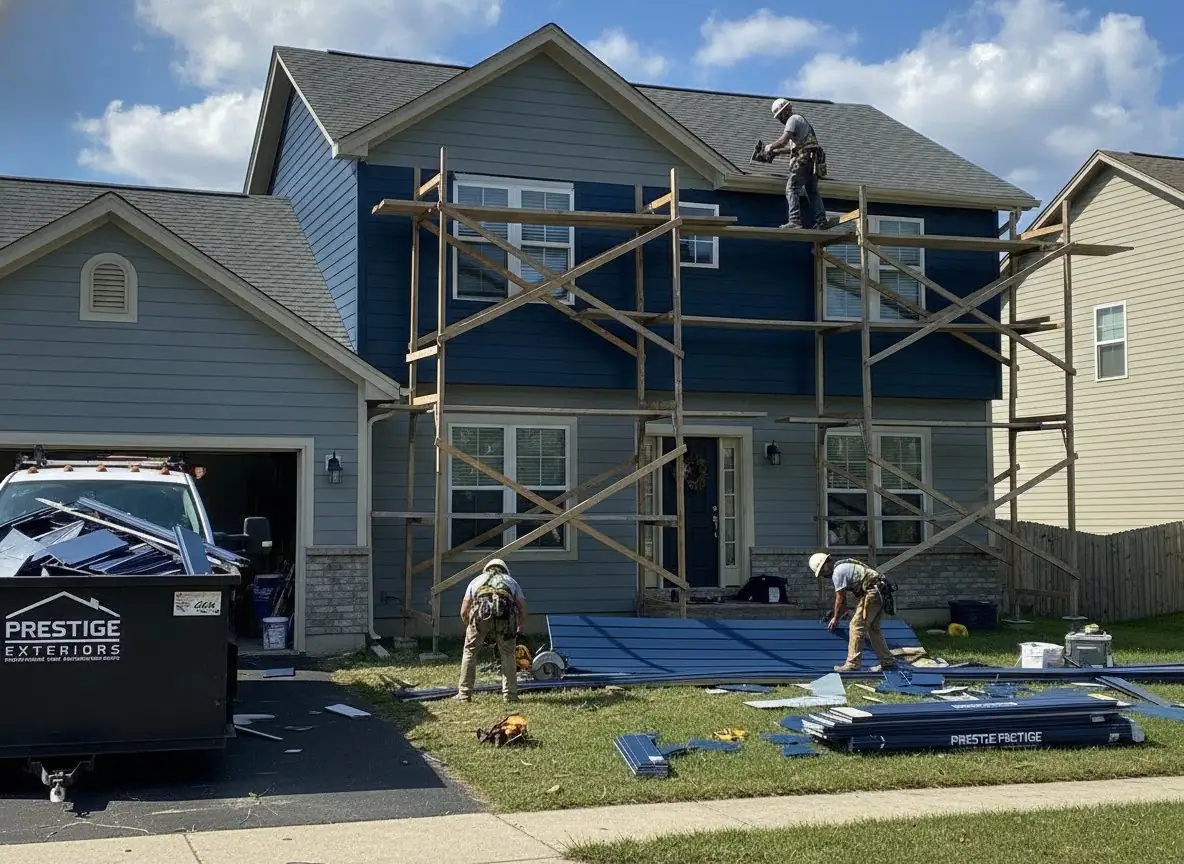
A look at siding projects and the materials we work with.
Service area
Areas we serve
Central Oklahoma Siding Pros serves homeowners and businesses throughout these communities:
- Jones
- Moore
- Yukon
- Edmond
- Bethany
- Spencer
- Del City
- Warr Acres
- Midwest City
- Arcadia
- Choctaw
- Nichols Hills
- Oklahoma City
- Piedmont
- The Village
Why choose us
Why choose Central Oklahoma Siding Pros?
Free estimates
Get a clear, no-obligation estimate before any work begins.
Licensed & insured
Your property and our crew are protected on every project.
Residential & commercial
One team for homes, multi-family and commercial properties.
Locally owned & operated
A local team serving your community and the surrounding area.
Get in touch
Find siding help near you
Request a free estimate online or give us a call — our team will follow up quickly.
- Call us(405) 451-1993
- Visit429 W Wilshire Blvd 2m 3, Oklahoma City, OK 73116
- HoursMon- Sun: 7 AM- 7PM